01
The person
Their character, family life, work, interests, achievements, humour, friendships and the memories people will recognise.


Once the funeral has been booked, the person leading the service will speak with the family about the life being remembered and the content of the ceremony. This guide explains what normally happens and provides ideas for music, poems, readings, hymns and the Order of Service.
A vicar, priest, minister or funeral celebrant will arrange to speak with the family.
They will ask about the person's life, character, beliefs, family and interests.
Together you can select music, hymns, readings, prayers and family contributions.
The final running order can then be used to prepare the Order of Service.
After the funeral arrangements and service venue have been confirmed, the person conducting the ceremony will normally contact the family to arrange a conversation. This may take place at home, at one of our funeral homes, by telephone or by video call.
The officiant may be a vicar, priest, minister or funeral celebrant. Their role is to listen carefully, understand the person who has died and help the family build a service that feels appropriate.
You do not need to have every choice ready before the meeting. It is often enough to begin with a few memories, favourite pieces of music, family stories and any religious or personal elements that matter to you.
The meeting is a supportive conversation rather than a test. The following subjects help the person conducting the funeral understand what will feel right for the family.
Their character, family life, work, interests, achievements, humour, friendships and the memories people will recognise.
Whether the service should be religious, non-religious or a combination, and whether the overall feeling should be formal, warm, reflective or celebratory.
Who may wish to read, speak, carry the coffin, choose music, share a memory or contribute a prayer, poem or personal message.
The music, hymns, eulogy, readings, prayers, visual tribute, committal and the way the family would like the service to close.
The officiant will put the chosen content into a clear sequence. This helps the family, funeral director, venue, musicians and anyone taking part understand what will happen.
Played as the coffin and mourners enter the chapel, church or service venue.
The officiant welcomes everyone and introduces the purpose and tone of the service.
A hymn may be sung. Where no hymn is chosen, a poem or short reading can work well here.
A tribute telling the story of the person's life, relationships, character and memories.
A quiet musical choice, sometimes accompanied at a crematorium by a visual tribute of photographs shown on the screens.
Delivered by the officiant, a family member or friend, or included as words for private reflection.
Where appropriate to the family's beliefs and the style of service.
The formal moment of farewell, adapted for cremation, burial or the particular faith tradition.
Thanks to those attending, details of donations and any invitation to a gathering after the service.
Played as the officiant, family and mourners leave the service venue.
Many crematorium bookings allow around 45 minutes for the complete chapel appointment. This can include time for the previous congregation to leave, mourners to enter and take their seats, the funeral service itself and everyone to leave afterwards.
When a large number of mourners is expected, simply bringing everyone into and out of the chapel can reduce the usable ceremony time. A nominal 45-minute booking may sometimes leave closer to 30 minutes for the spoken service and music.
Music does not have to be sad or traditional. A favourite artist, classical piece, television theme, sporting anthem or song associated with a shared memory can make the service instantly personal.
Often calm, dignified or gently emotional as the coffin enters or photographs are shown.
The final choice may be reflective, confident, humorous or uplifting and can leave mourners with a strong memory of the person.
Open a card to read the complete poem. A poem can be delivered by the officiant, a relative or friend, or printed in the Order of Service.
A gentle poem about the lasting place someone keeps within family life.
A positive poem about measuring a life through love, kindness and memories.
A tribute to a mother whose care was present in the everyday details of family life.
A warm tribute to a father remembered for guidance, strength and quiet love.
For a husband, wife or partner, reflecting on companionship and enduring love.
A well-known reflection on remembrance, grief and permission to smile again.
A reading can be less formal than a poem and may suit a celebrant-led service, a family contribution or a quiet moment before the committal.
A flexible reading suitable for remembering the whole of a person's life.
A reading about the lasting influence of a parent, grandparent, partner or friend.
A short reading acknowledging that grief is not always easy to express.
A non-religious reading about the difference one person makes to others.
A short reading of faith, trust and peaceful commendation.
A concise reading suited to the final part of the ceremony.
Open a card to view commonly used verses. Hymn books and church traditions can use slightly different wording, so the final version and verse selection should always be confirmed with the minister, organist or venue before printing.
A solemn and familiar hymn asking for God's presence through change, darkness and parting.
A widely recognised hymn about grace, guidance and coming safely through difficulty.
A strong congregational hymn about guidance, strength and the final journey.
A warm and familiar hymn celebrating creation and the natural world.
A dignified evening hymn often chosen near the close of a service.
A measured hymn about quietness, peace and finding calm amid grief.
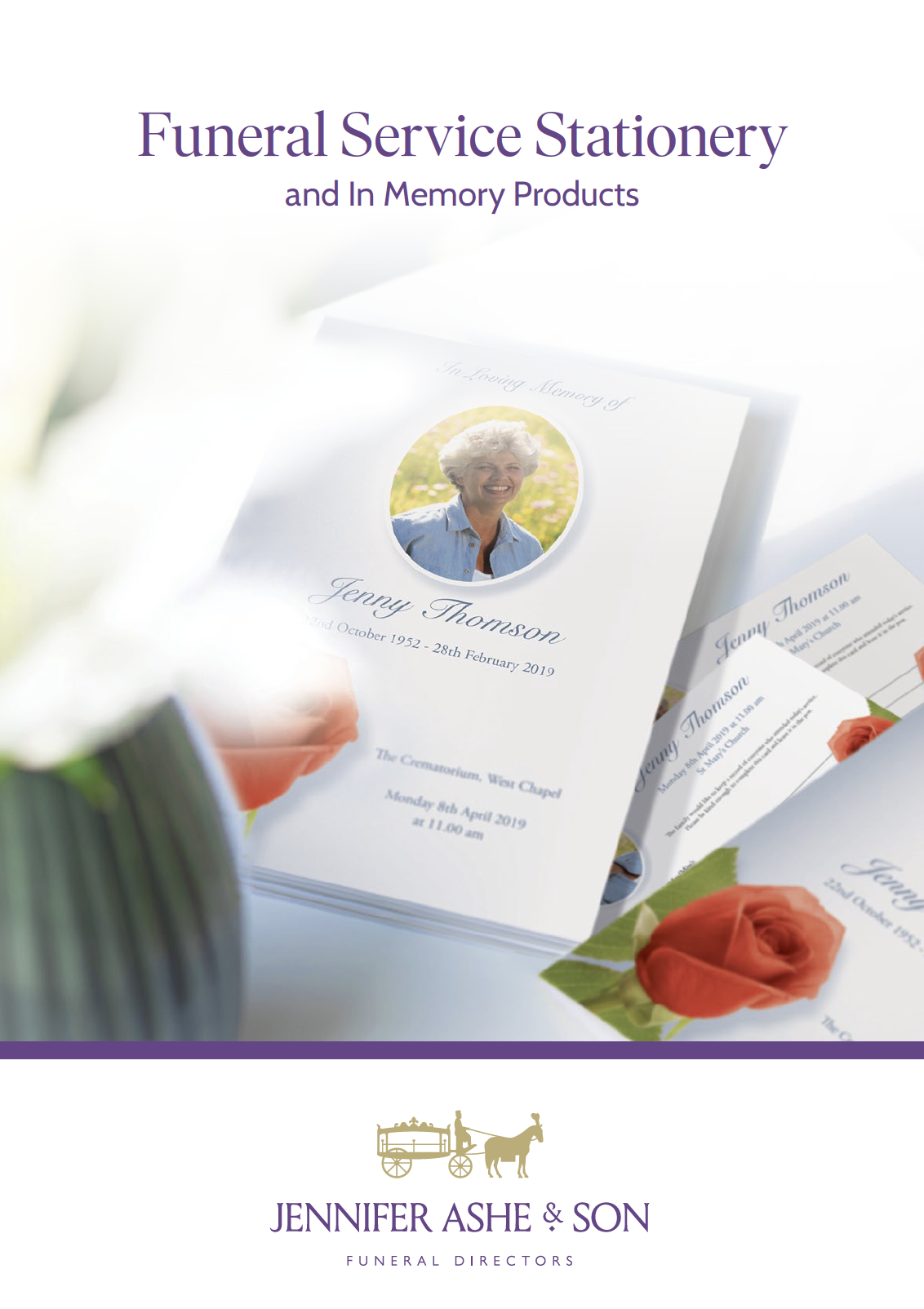
In many ways, planning the service content is also the first stage of planning the booklet. Once the officiant and family have agreed the running order, our team can turn it into a clear and personal Order of Service for mourners to follow and keep.
The booklet can be simple and traditional or highly personalised, using photographs, colours and details that reflect the person being remembered.
The family makes the choices, with guidance from the vicar, priest, minister or celebrant conducting the ceremony. Religious venues may have particular requirements, but there is usually considerable scope for personal music, memories, readings and family contributions.
No. The officiant can prepare the eulogy from the memories and information shared during the planning conversation. A relative or friend may write or deliver part of the tribute if they wish.
Yes, subject to the available service time. It helps to tell the officiant in advance so each contribution can be placed naturally within the running order. A longer chapel booking may be worth considering where several people wish to speak.
Many services use processional, reflection and recessional music, with an additional choice sometimes used around the committal. The exact number depends on the length and style of the ceremony.
Many crematoria can provide a visual tribute on chapel screens. The available formats, number of photographs, deadlines and charges vary by venue. Our team can explain the local options.
Not always. It may be helpful where a large attendance is expected, several family members wish to speak, the eulogy is detailed, or the service includes several hymns, readings and pieces of music. We can provide the current cost and availability before the booking is confirmed.
Yes. A funeral celebrant can conduct a ceremony without hymns, prayers or religious language. The service can focus entirely on the person's life, relationships, music and memories.
The content should be agreed as early as practical so there is time for design, proof-reading, family approval and printing. Your Personal Funeral Advisor will give you the relevant deadline for your funeral date.
Your Personal Funeral Advisor can explain the service timings, music system, visual tribute choices and Order of Service deadlines for the venue you have selected.