

What to do when someone dies? When someone passes away, the very first things that need to happen are getting a legal pronouncement of death and then letting close family and friends know. After those initial, difficult conversations, what you do next depends entirely on the circumstances of the death.
Your First Steps in the Initial 24 Hours
That first day is often a disorienting mix of shock, grief, and a sudden, unwelcome list of urgent tasks. It’s overwhelming. The key is to take it one small, manageable step at a time, not to try and do everything at once. What you need to do immediately changes quite a bit depending on where your loved one died.
If they were in a hospital or a hospice facility, the medical staff on site will take care of the initial legal steps. They’ll make the official pronouncement of death and handle the paperwork for the medical certificate. Your main responsibility at this point is simply to let them know which funeral home you’ve chosen so they can authorize the release of your loved one’s body.
When a Death Occurs at Home
The process is a bit different if the death happens at home. If your loved one was receiving hospice care, the first person you should call is their hospice nurse. They can legally pronounce the death and will walk you through what to do next, which means you won’t need to call 999.
On the other hand, if the death was sudden or unexpected and the person was not under hospice care, you must call 999 immediately. The emergency services are required to attend, which will involve the police and eventually the coroner. It’s a difficult but necessary procedure. In these situations, it’s crucial that you don’t touch or move anything in the room until they give you the all-clear.
A Note on Pronouncement of Death: This isn’t just a formality; it’s the official starting point for everything else. Only a qualified professional—like a doctor, coroner, or registered hospice nurse—can legally pronounce a death. This action is what allows all other legal and administrative processes to begin.
This visual guide can help clarify those first critical contacts, which can be confusing in the moment.
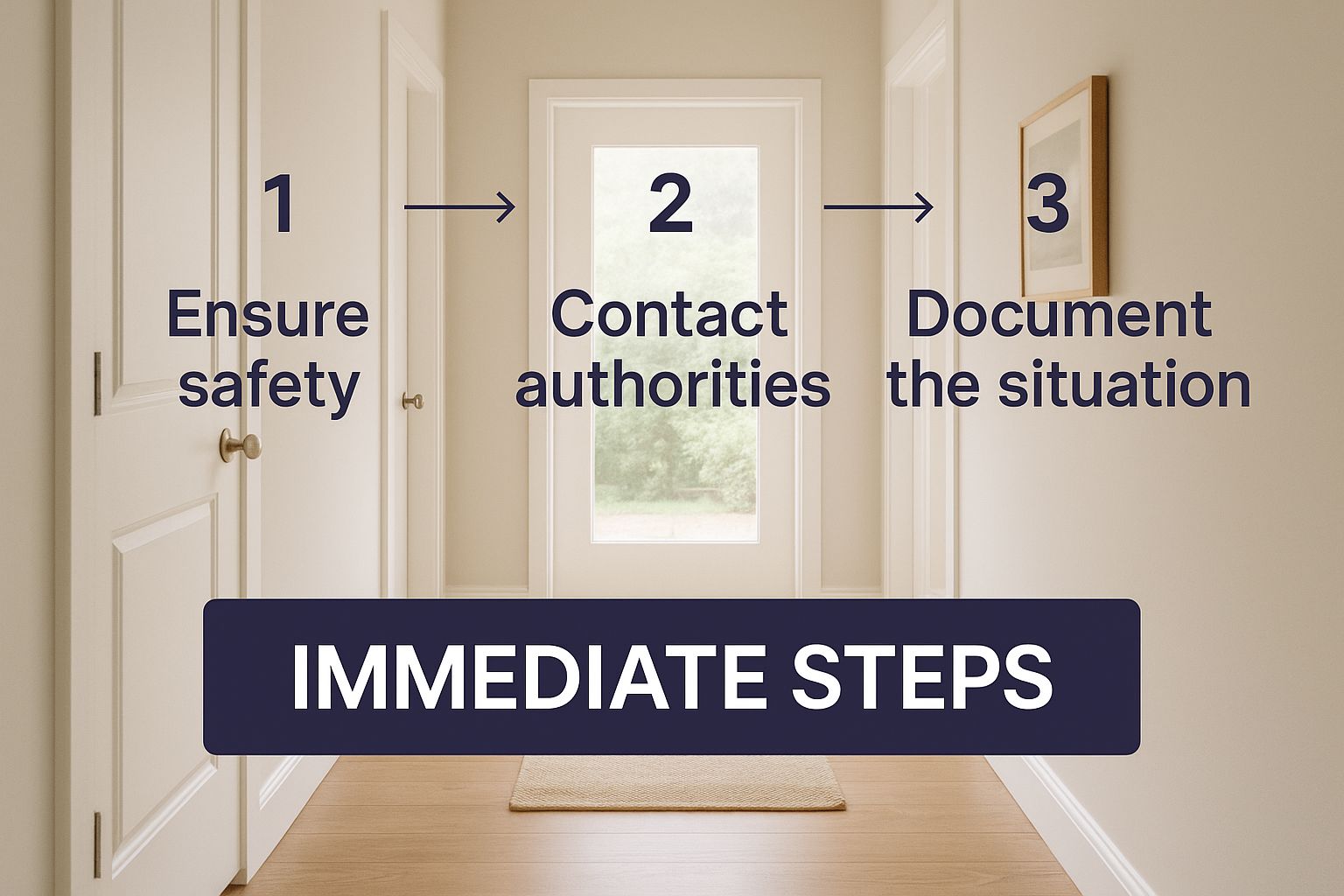
As you can see, who you call first—hospice versus 999—is the key difference between an anticipated death at home and a sudden one.
To help you act quickly and correctly, here is a simple checklist summarizing the immediate actions based on where the death occurred.
Immediate Actions Checklist By Location of Death
| Location of Death | Primary Contact | Key Action |
|---|---|---|
| Hospital or Hospice Facility | Medical Staff/Nurse | Authorize release to the chosen funeral director. |
| At Home (Under Hospice) | Hospice Nurse | Follow their guidance for pronouncement and next steps. |
| At Home (Unexpected) | 999 | Wait for emergency responders; do not disturb the area. |
| Public or Other Location | 999 / Police | Emergency services will take charge and guide you. |
This table is just a quick reference. In any situation involving an unexpected death, the authorities will provide clear instructions on what you need to do.
Securing the Necessary Documents
No matter the location, getting your hands on the Medical Certificate of Cause of Death is a top priority. The doctor who was caring for the person or the coroner will issue this. You absolutely need this certificate to register the death, which is a legal requirement.
Registering the death is the step that makes everything “official” and allows you to get copies of the death certificate. This is the document you’ll need for almost everything, from closing bank accounts and claiming life insurance to handling pensions. Globally, the crude death rate in 2023 was around 7.58 deaths per 1,000 people, though this varies hugely from place to place—Bulgaria’s rate was 15.6, while Qatar’s was just 1.5. If you’re interested in the data, you can find more in this report on death rates by country.
Once you’ve made those first few calls, here are a few other practical things to think about:
- Secure their home and car. If your loved one lived alone, this is especially important. Make sure their property is locked up and, if they had pets, that someone is taking care of them.
- Look for a will or final wishes. They may have left a will, a pre-paid funeral plan, or other notes about their preferences. These are often found with other important papers.
- Don’t rush financial decisions. It can be tempting to start closing accounts right away, but it’s better to wait. You need the official death certificate and legal authority first, so give yourself some breathing room.
Taking care of these immediate items calmly will create a much smoother path for the more involved tasks you’ll face in the coming days and weeks.
Tackling the First Week
After the initial blur of the first 24 hours, the reality of what needs to be done starts to set in. This first week is often a strange mix of profound grief and unexpected administrative tasks. It can feel overwhelming, but breaking it down into manageable steps helps you navigate the fog. Think of this week as laying the foundation for handling the deceased’s affairs.
Making It Official: Registering the Death
One of your first legal obligations is to register the death. You’ll need the Medical Certificate of Cause of Death, which the doctor or coroner will have given you. In the UK, you generally have five days to do this, but check the specific rules for your area. This isn’t just a formality; registering the death is how you get official death certificates, and you’re going to need them.
A Piece of Advice on Death Certificates: Order more than you think you need. Seriously. I recommend getting at least 10-15 certified copies from the start. Banks, pension providers, insurance companies, and government offices will all demand their own official copy—not a photocopy. Having a stack on hand will save you from frustrating delays down the road.
Finding the Will and the Executor
Once the death is registered, the next critical step is to find the will. This document is the roadmap for what the person wanted, and it names the executor—the individual or institution legally responsible for carrying everything out.
So, where do you even start looking? Wills often turn up in predictable places:
- A home safe, a fireproof box, or a locked filing cabinet.
- With their solicitor or accountant.
- In a bank’s safety deposit box.
- Sometimes, they’re registered with the Principal Registry of the Family Division.
If you locate a will, the person named as the executor is now in charge. They have the legal authority to start dealing with the estate. If you can’t find a will after a thorough search, the situation is more complicated. The law of intestacy comes into play, which dictates who inherits and who can manage the estate.
Sharing the News
Telling people that a loved one has died is one of the toughest things you’ll ever have to do. It’s an emotionally draining task, so give yourself some grace. You don’t have to bear this burden alone.
A good approach is to list everyone who needs to know and group them:
- Immediate Family: This is for a phone call or, if possible, an in-person conversation. Start with the closest circle—parents, partners, children, and siblings.
- Close Friends and Other Relatives: Next are the aunts, uncles, cousins, and dear friends who were a big part of their life.
- Wider Circles: This group includes colleagues, neighbors, and friends from clubs or social groups.
When you make these calls, it’s perfectly fine to be direct. A simple, “I have some very sad news. [Name] passed away this morning,” is all that’s needed to start. Don’t feel pressured to share details unless you’re comfortable doing so.
Lean on others for support. Ask a sibling or a close friend to help you call people. Splitting the list makes a world of difference. For the wider circles, it’s often appropriate to send a group text or email, or to ask a single point of contact—like their manager at work—to share the news with the team.
Other Practical Things to Handle
Beyond the big items, a few other practical matters will need your attention this week. Get a simple notebook or a folder and start a running log of every conversation, every piece of mail, and every expense. You’ll be glad you did. This little bit of organization will be a lifesaver later.
If the person lived alone, arrange to have their mail forwarded. A pile of letters in the mailbox is a clear sign that a home is empty. Lastly, start gathering their essential documents—birth and marriage certificates, passport, and National Insurance number. You’ll need all of these for the journey ahead.
Planning a Meaningful and Personal Farewell

Arranging a funeral or memorial service is one of the most significant and public acts of love you can perform after someone dies. It’s a chance for everyone to come together, to grieve openly, and, most importantly, to celebrate a life that was lived.
While this process is undoubtedly emotional, it doesn’t have to feel overwhelming. The real goal here is to create a farewell that truly feels like them—a reflection of their personality, their values, and their unique story. It’s about finding a balance between what they would have wanted, what grieving friends and family need, and what is financially realistic. By taking a thoughtful approach, you can create a tribute that feels right for everyone involved.
The First Major Decision: Burial or Cremation
One of the very first, and biggest, decisions you’ll need to make is whether to choose burial or cremation. There’s no right or wrong answer. It’s a deeply personal choice often shaped by the person’s wishes, family traditions, religious beliefs, and practical things like cost.
If your loved one left clear instructions in a will or a pre-paid funeral plan, your path is already set. If not, the decision falls to you and your family. You’re not alone in this; with a global death rate of around 7.5 deaths per 1,000 people, arranging a funeral is a universal experience. You can see how these trends vary worldwide with data from our friends at TradingEconomics.
As you weigh the options, think about these key points:
- A Place to Visit: A burial provides a specific, physical place for family and friends to visit for years to come. Cremation offers more flexibility; ashes can be scattered in a meaningful location, kept at home in an urn, or interred in a columbarium.
- The Financial Side: Generally speaking, cremation is often a more affordable choice compared to a traditional burial, which involves the costs of a casket, burial plot, and headstone.
- Cultural and Religious Beliefs: For many families, this is a huge factor. Certain faiths have specific rites and strong preferences for either burial or cremation, so it’s important to honor those traditions.
Finding the Right Funeral Director
Choosing a funeral director is a bit like hiring any other trusted professional, but with an added layer of emotion. You need someone who is not just competent, but also compassionate and patient. This person will be your guide through a confusing and difficult time, so finding a good fit is absolutely essential. Don’t feel rushed or pressured to go with the first person you call.
When you speak with a funeral director, you’re really interviewing them for an incredibly important role. It helps to have a few questions ready so you can understand exactly what they offer and how their pricing works.
A Note From Experience: A truly great funeral director will listen more than they talk. Their job is to understand your loved one and what your family wants, not to upsell you on services you don’t need. They should present you with options and guidance, but the final decisions should always be yours.
Here are a few essential questions to ask any potential funeral director:
- Are you an independent, family-run business, or are you part of a larger corporate group?
- Can you give me a completely itemized price list for all of your services and products?
- What different packages do you offer, and what exactly is included in each one?
- How do you arrange viewings at the chapel of rest?
- Are you able to accommodate the specific cultural or religious requests our family has?
At Jennifer Ashe & Son Funeral Directors, we build our entire approach on total transparency and genuine empathy. Our “Safe Hands” promise is our commitment to guiding you through every choice with dignity and care, making sure you feel supported, not sold to.
Infusing the Service with Personal Touches
The funerals that stick with us, the ones we remember for years, are those that genuinely capture the spirit of the person we’ve lost. This is your chance to go beyond a standard format and weave in the little details that made them who they were. It’s this personalization that transforms a service into a true celebration of life.
Think about what made them special. Was it their quirky sense of humor? Their unwavering devotion to a football club? Their passion for gardening? All of these things can be woven into the service in beautiful ways.
Here are a few ideas to get you started:
- Music: Don’t just stick to hymns (unless they loved them!). Create a playlist of their favourite songs—the ones that make you smile or tap your foot—to play before, during, or after the ceremony.
- Readings & Stories: Instead of a generic poem, maybe a friend could read a passage from their favourite book. Or better yet, someone could share a funny, heartfelt story that perfectly sums them up.
- Memory Table: Find a small table and display a collection of photos, mementos, and personal items. It could be their favourite hat, a programme from a beloved play, or a few of their tools. Add a guest book where people can jot down their own memories.
- The Eulogy: This is the heart of the service. Work with whoever is delivering it to share stories that paint a vivid picture—the accomplishments, the funny habits, the everyday moments of love.
These personal touches are what people will carry with them. They turn a sad day into a powerful and heartfelt tribute, bringing comfort and connection to everyone who is there.
Once the funeral services are over, the work shifts from public grieving to private administration. This next phase—managing your loved one’s financial and legal affairs—is a marathon, not a sprint. It takes a great deal of patience and organization to formally settle an estate.
The person named as the executor in the will—or an administrator appointed by the court if there isn’t one—is in charge here. This role comes with a serious legal responsibility, called a fiduciary duty, to act in the best interests of the estate and its heirs. It’s a huge position of trust.
Your first job is to essentially become a financial detective. You need to gather every piece of paper that sheds light on their financial life. This is the bedrock for everything else you’ll do.
Locating and Organizing Key Documents
Before you can call a single bank or pay a bill, you have to get a complete picture of their finances. Start looking for any and all documents that outline their assets, debts, and other obligations. My advice? Get a dedicated binder or folder right away. You’ll thank yourself later.
You’ll be on the hunt for a wide range of paperwork:
- Bank and investment statements for every checking, savings, or brokerage account.
- Loan and mortgage documents to understand what debts are outstanding.
- Credit card statements, which help you identify all active accounts.
- Insurance policies—don’t forget life, home, and auto.
- Pension or retirement plan information from any past employers.
- Recent utility bills and other regular household expenses.
- Tax returns from the last couple of years are a goldmine for finding income sources and assets.
This initial search often feels like you’re putting together a 1,000-piece puzzle. Check the obvious places first: filing cabinets, desk drawers, and that pile of mail on the counter. If they had a safe deposit box, you’ll need to work with the bank to gain access. This almost always requires a death certificate and proof that you’re the executor.
Understanding the Probate Process
Once you have a handle on the finances, the next big hurdle is often probate. This is the formal court process that validates the will, officially appoints the executor, and oversees the entire settlement of the estate.
Settling an estate is a major undertaking. The executor or administrator will need certified copies of the death certificate to even begin the probate process, which is the legal path to settling debts and distributing property. Depending on how complex the estate is and what local laws require, this can take months or even years. For example, in the US, where the death rate is about 9.28 per 1,000 people, estate settlements are a common, but often lengthy, process involving courts, banks, and tax authorities. You can see how this kind of demographic data is tracked at sources like this global metrics resource.
A Practical Insight on Probate: Here’s something a lot of people don’t realize—not every estate has to go through probate. Smaller estates, or those where major assets like a house were held in joint tenancy or a trust, might be able to bypass this formal court process. It’s definitely worth talking to a solicitor to see if this applies. It could save a massive amount of time and money.
If probate is necessary, the executor will need to apply for a “grant of probate.” This is the official document that gives you the legal authority to get into bank accounts, sell property, and ultimately give the assets to the beneficiaries listed in the will.
Notifying Financial Institutions and Government Agencies
With the death certificate and the grant of probate in hand, you can start the methodical task of notifying all the relevant organizations. This is why everyone tells you to get multiple certified copies of the death certificate—you’ll need them.
Your notification list will be long. Be prepared for a mix of phone calls, online forms, and snail mail, as every organization has its own way of doing things.
Essential Notifications Checklist
| Category | Who to Contact | Why It’s Important |
|---|---|---|
| Financial | Banks, credit unions, credit card companies, and loan providers. | To freeze accounts, stop fraud, and begin transferring funds to the estate. |
| Government | The IRS, Social Security Administration, and state tax agencies. | To stop benefit payments (like Social Security) and handle final tax obligations. |
| Insurance | Life, home, and auto insurance companies. | To file any necessary claims and to update or cancel the policies. |
| Utilities | Gas, electric, water, phone, and internet companies. | To transfer accounts to another person’s name or close them to stop bills from piling up. |
Managing Debts and Digital Legacy
One of the executor’s most important jobs is to pay off the deceased’s debts using money from the estate. This covers everything from credit card balances and car loans to the mortgage. Critically, all debts must be settled before any inheritance is distributed to the heirs.
And in today’s world, there’s another layer: their digital legacy. This includes social media profiles, email accounts, and online subscriptions. Many platforms, like Facebook, let you “memorialize” an account as a tribute, or you can ask for it to be deleted. Taking care of these digital footprints helps protect their identity from theft and provides a real sense of closure for everyone.
Caring for Yourself and Others Through Grief

After the whirlwind of phone calls, paperwork, and funeral arrangements, an unnerving quiet can descend. This is often when the reality of the loss truly hits. The practical to-do list is done, but the emotional journey of grieving is just beginning.
Navigating this next phase is deeply personal. There’s no right or wrong way to feel, and grief doesn’t follow a schedule. It can show up as profound sadness, unexpected anger, or even a confusing sense of numbness. The most important thing you can do is allow yourself to feel whatever comes up, without judgment.
Grief Isn’t a Straight Line
Many of us imagine grief as a linear process with clear stages, but the reality is much messier. It’s more like a coastline with waves—some days the water is calm, and on others, a wave of sorrow can knock you off your feet, often triggered by something as simple as a song on the radio or the smell of their favorite meal. This is completely normal.
Everyone’s experience is unique. One person might find solace in talking for hours, while another needs quiet time alone to process. Be patient with yourself and with others who are grieving alongside you. Your relationship with the person who died was one-of-a-kind, and so is your grief.
A Crucial Reminder: Taking care of your own well-being right now isn’t selfish—it’s essential. You can’t support others or begin to heal if your own cup is empty. Prioritizing your emotional and physical health is a fundamental part of moving through grief.
Practical Self-Care in a Time of Grief
When you’re grieving, basic tasks can feel like climbing a mountain. The goal isn’t to force yourself back to “normal” but to create small, gentle routines that can act as an anchor in the storm.
These simple, manageable actions can bring a sense of stability when everything feels out of control:
- Stick to simple routines. Try to wake up and go to sleep around the same time. Eat small, regular meals, even if you don’t feel hungry. These little bits of structure can make a huge difference.
- Move your body gently. You don’t need to train for a marathon. A simple 15-minute walk outside can do wonders for clearing your head and easing physical tension.
- Stay hydrated. Grief is emotionally and physically exhausting, and it’s easy to forget to drink water. Keep a bottle nearby and take sips throughout the day.
- Hold off on big decisions. If at all possible, try to postpone major life changes—like selling the house, quitting your job, or making large financial moves—for at least a year. Your mind needs time to process before taking on more stress.
Dealing with the financial side of an estate can be overwhelming. Learning how to organize finances is a valuable skill that can help you manage both the estate’s affairs and your own during this difficult time.
Finding and Leaning on Your Support System
You don’t have to go through this alone. Grief can feel incredibly isolating, but support is often closer than you realize. This is the time to lean on friends, family, and your community.
It can be hard to ask for help, but people genuinely want to be there for you—they just might not know how. Being specific makes it easier for them. Instead of a vague “I’m having a hard time,” try saying, “Could you pick up some groceries for me this week?” or “I’d love some company to just watch a movie with tonight.”
Don’t forget about professional resources designed specifically for this journey:
- Grief Counselors: A therapist who specializes in bereavement can offer a safe, confidential space to explore your feelings and find healthy coping mechanisms.
- Support Groups: There is immense power in connecting with others who “get it.” Sharing your story and hearing from others on a similar path can make you feel so much less alone.
- Community and Faith Leaders: If you’re part of a spiritual or faith community, leaders like pastors or rabbis can be a source of great comfort and guidance.
Remember, the journey through grief is a marathon, not a sprint. Be kind to yourself, allow for the bad days, and trust that with time, the sharp edges of pain will soften, leaving the warmth of memory in their place.
Answering Your Pressing Questions After a Loss
When you’re trying to figure out what to do after someone passes away, you’re bound to run into specific, practical questions that need clear answers. It’s a confusing time, and tackling these logistics can feel overwhelming. Having the right information on hand can make all the difference, giving you the confidence to move forward.
Let’s walk through some of the most common concerns that come up—from paperwork and legal matters to the more modern task of handling a digital life.
How Many Death Certificates Will I Actually Need?
This is one of those incredibly practical questions people often don’t think to ask until they’re already in the thick of it. Take it from my experience: getting this right from the start will save you a world of headaches down the line.
I always advise families to order at least 10 to 15 certified copies of the death certificate right away. It might sound like a lot, but you’ll be surprised how many organizations require an official copy—not a photocopy—for their records. Having a good supply on hand means you won’t face frustrating delays when trying to settle multiple accounts at once.
You’ll likely need to provide a certified copy to places like:
- Banks and financial institutions
- Life insurance providers
- Pension and retirement funds
- The Social Security Administration
- Any companies where your loved one had a loan or credit card
- The IRS for filing final tax returns
- Vehicle title agencies (like the DVLA or DMV)
What if My Loved One Didn’t Leave a Will?
When someone passes away without a valid will, it’s legally referred to as dying “intestate.” In these situations, because the person’s final wishes aren’t formally documented, the law has to step in to decide how their estate is handled. This means state or national laws—not the family’s informal understanding—will dictate how everything is divided.
The court will appoint a person known as an “administrator” to oversee the estate. Their responsibility is to first pay off any outstanding debts and taxes, and only then distribute the remaining assets to the closest relatives based on a rigid legal hierarchy.
A Word of Caution: Settling an intestate estate is almost always slower, more public, and more costly than when a will is present. The outcome might not align with what your loved one would have wanted, which can unfortunately sometimes create tension among family members.
How Should I Manage Their Social Media and Email Accounts?
Dealing with a loved one’s online life is a relatively new but vital part of the process. It’s not just about sentiment; it’s about protecting their identity from fraud and ensuring their digital presence is managed with respect.
Thankfully, most major platforms now have established procedures for this. Facebook, for instance, gives you the option to either “memorialize” an account or request its permanent deletion. Memorializing it turns the profile into a tribute page where friends can share memories, but it prevents anyone from logging in. For email services like Gmail, you can submit a formal request—usually with proof of your identity and the death certificate—to have the account closed.
It’s a good idea to tackle these accounts as soon as you feel able. If left active, they can become targets for hackers or cause unnecessary distress to friends and family who might not have heard the news.
At Jennifer Ashe & Son Funeral Directors, we know these questions are just the tip of the iceberg. Our “Safe Hands” promise means we’re here to give you clear, compassionate answers and support you through every single step. For guidance you can rely on, please visit us at https://www.jafunerals.co.uk.
Article created using Outrank